Community Project, Historical, Public Art, Social Justice, Storykeeping, Storytelling
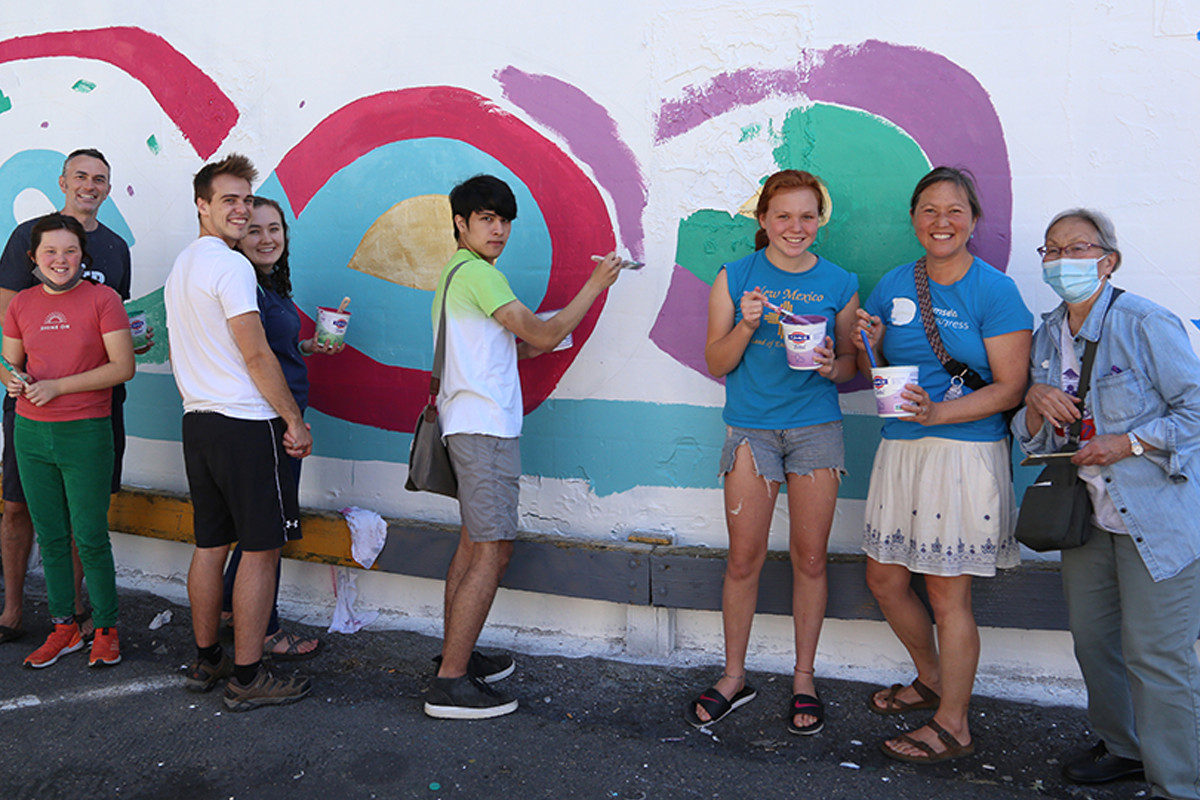
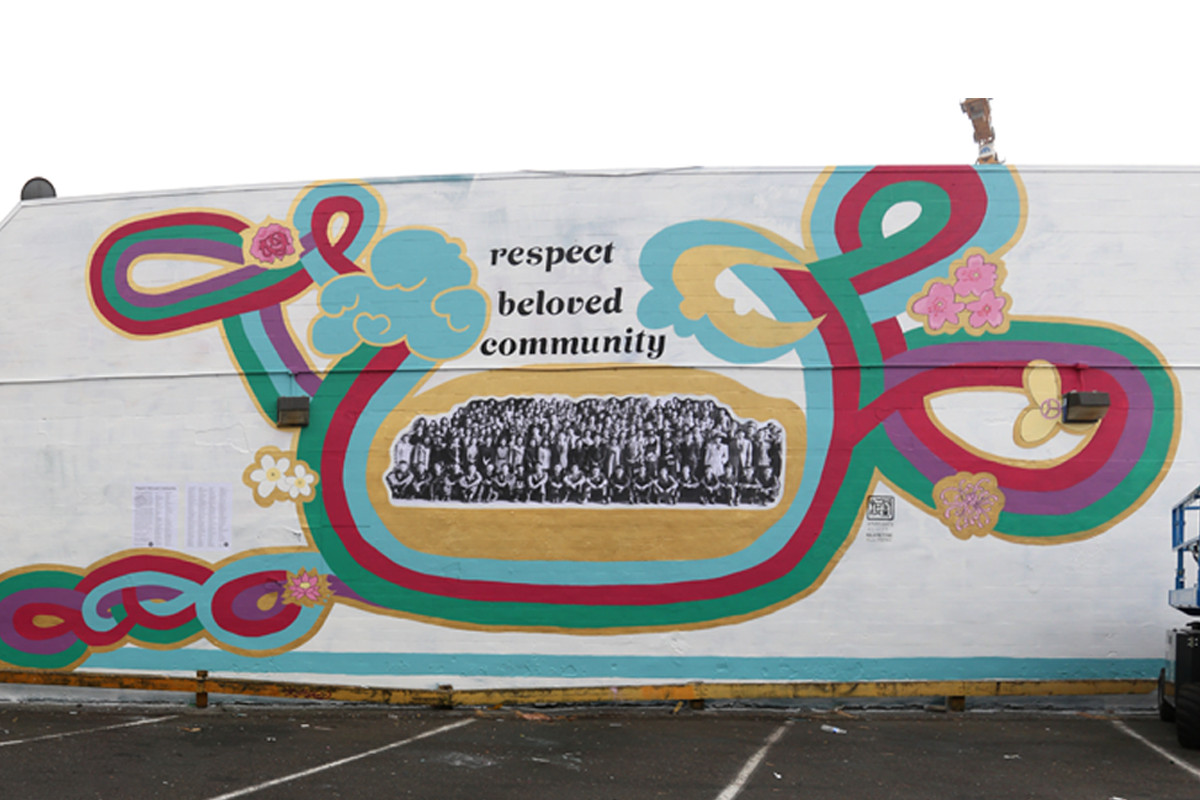
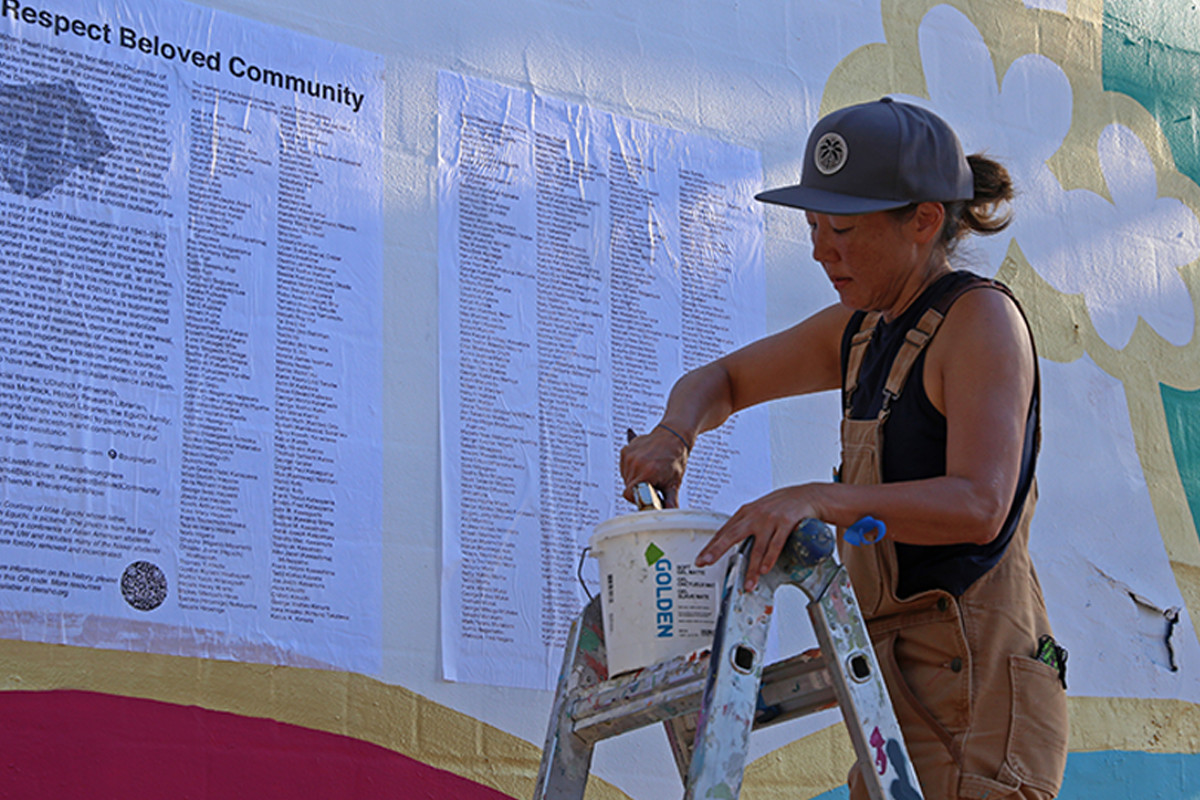
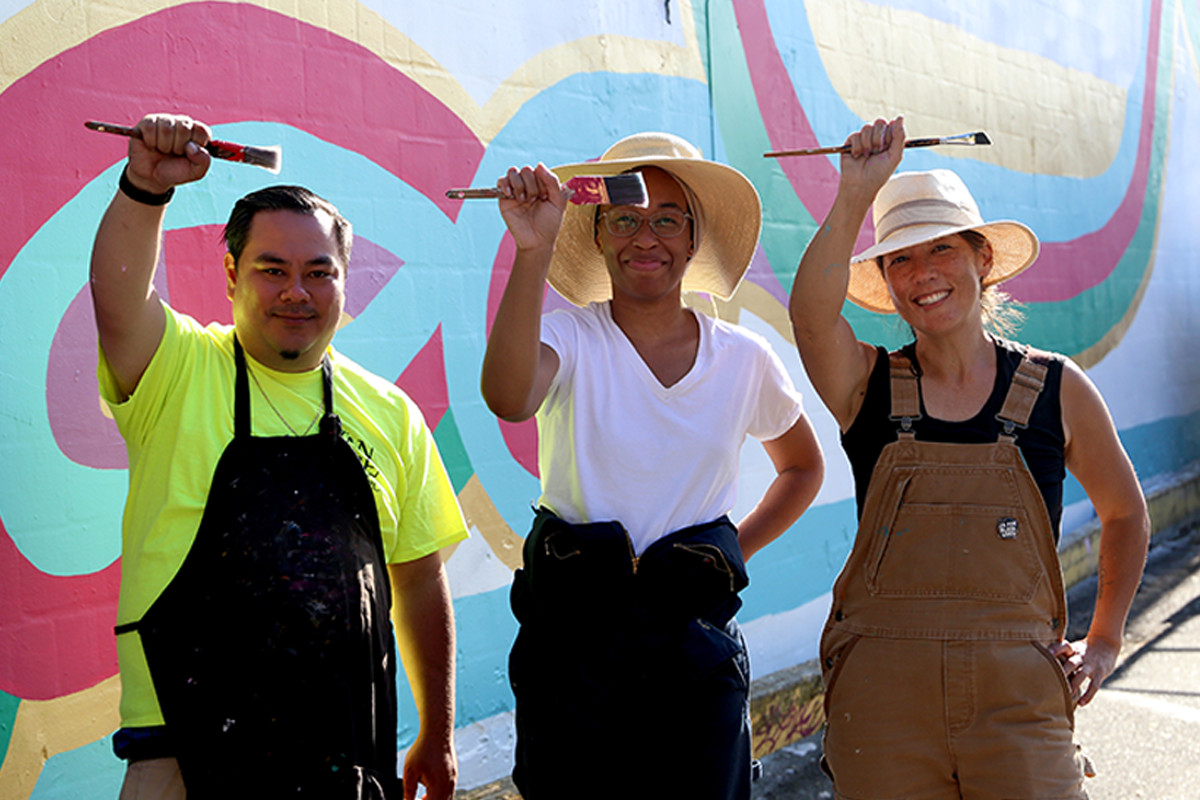
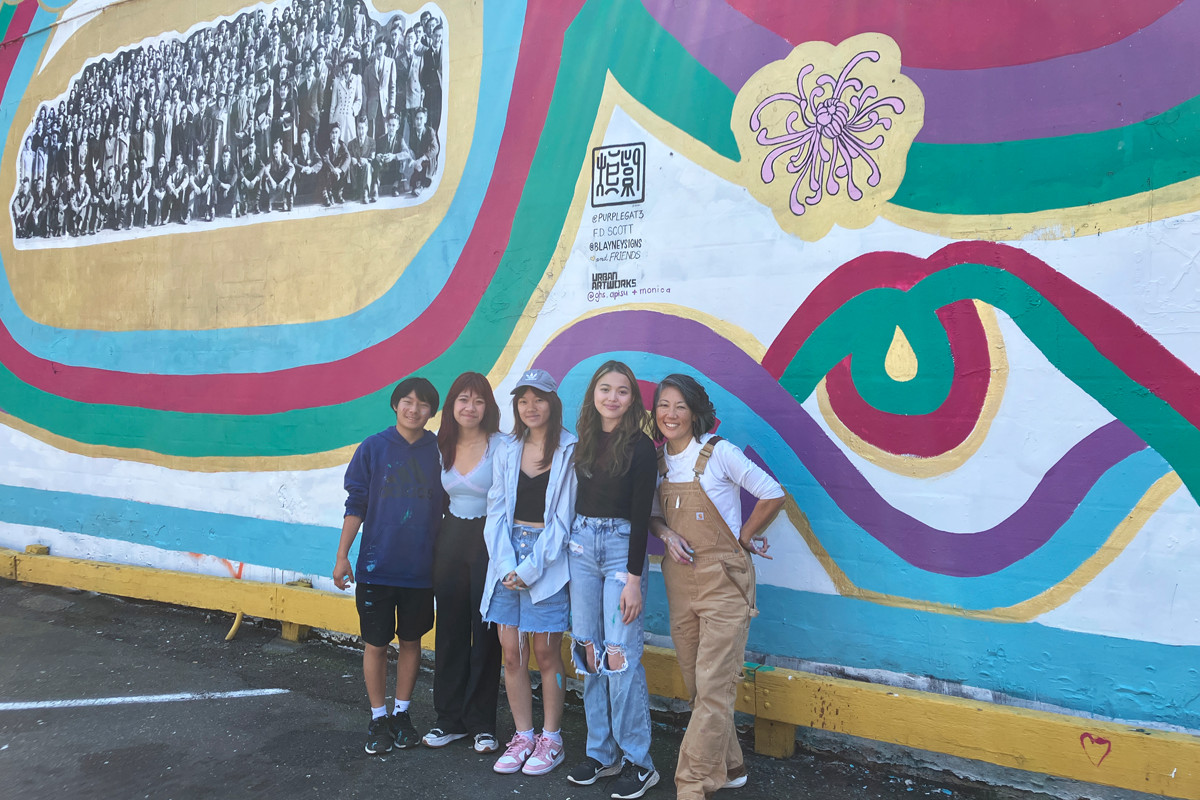
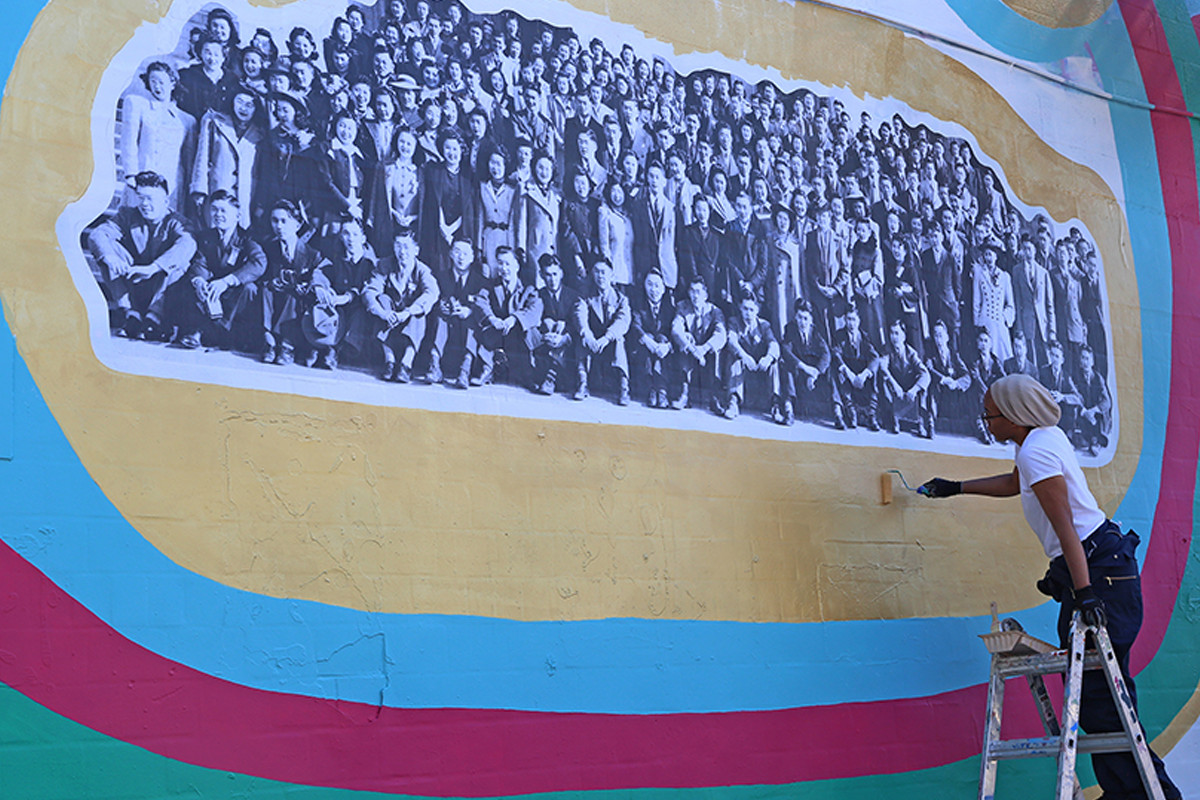
2021, Seattle, acrylic paint, wheat paste on cement, 30 ft x 75 ft, created with help from Fin’es Scott, Tom Blayney and many community hands, including Urban Artworks.
When Pearl Harbor was bombed in December of 1941, there were 449 Japanese American (Nikkei) students enrolled at the University of Washington. Many campus groups and the campus newspaper The Daily, called for tolerance in the treatment of these students and the large Nikkei community in Seattle. However, the overall reaction on campus was mixed and the mood of the country eventually gave into racist wartime hysteria and xenophobia. This ultimately resulted in E.O. 9066 which allowed the forced removal and incarceration of more than 120,000 Japanese Americans on the west coast. UW President Lee Paul Sieg, other administrators, and faculty fought for the Nikkei students to remain enrolled. When that failed, they placed as many students as they could (58) in schools outside of the “exclusion zone.”
I am honored to share this work located off the Ave between 42nd/43rd Streets in the University District of Seattle, WA.
The story of the UW Nikkei students of 1941-1942 is a story of this community and it is an under-told, under-taught, and erased story. It spotlights the critical importance of those who are targeted and allies alike in being vigilant, speaking up, and defending the civil liberties of all, at all times. This story is also linked to this moment’s rise in anti-Asian racism stirred by the 45th U.S. president and those who wish to hold onto America’s supremacist systems. In this mural, the students are surrounded by vibrant wave and cloud forms that symbolize both despair and resilience, destruction and renewal. Placed on top of the patterns of movement, are flowers with important symbolism across Asian and Pasifika cultures: cherry blossom, peony, soursop, lotus, plumeria. These are in remembrance of those who have suffered from anti-Asian violence and harm.